Title: Florida's Sky Show: When Space Launches Become a Shared Dream
Okay, folks, buckle up because something incredible is happening right before our eyes, literally! We're seeing a convergence of events in Florida – fireballs, rocket launches, and even debris from other launches thousands of miles away – turning the night sky into a shared spectacle. It's more than just a cool sight; it's a signal of something profound. It's a shift in how we experience space exploration, making it feel more immediate, more personal, and more ours.
This past week alone, we've had reports of fireballs streaking across the sky, coinciding with SpaceX launch attempts from Cape Canaveral. Fireball spotted in Florida. Other times mystery streaks, rockets from out of state were seen. Social media lit up with photos and videos. People were wondering: was it space junk? A meteor? Some rogue satellite? Turns out, it wasn't the SpaceX launch itself, which had been scrubbed due to weather. But the buzz, the collective awe, that's the real story here. And then there's the Starship launch from Texas, visible all the way in Florida. I mean, think about that for a second—1,500 miles! That's like watching the future unfold from your own backyard.
The Democratization of Space
What we're witnessing is the democratization of space. It's no longer just the domain of governments and agencies locked away in sterile labs. It's becoming a shared human experience. It's like the printing press all over again, but instead of information, we're spreading access to the cosmos.
Consider this: remember when seeing a plane overhead was a marvel? Now, seeing rockets is becoming almost commonplace, especially in Florida. But here's the thing: each launch, each fireball, each glimpse of space debris, sparks a conversation. It ignites curiosity. It inspires dreams. I remember when I first saw a launch, and it was like a dream come true.
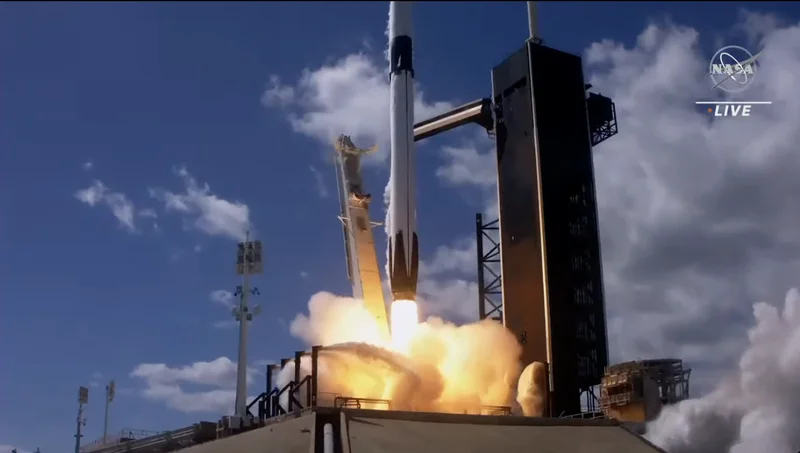
But this also raises an important question. We're sending more and more hardware into space. What happens when things go wrong? We saw debris from a Starship explosion back in March 2025 visible from Florida to the Caribbean. It's a reminder that with great power comes great responsibility. We need to think seriously about space traffic management and debris mitigation. It’s not just about the thrill of the launch, but about the long-term health of our access to space.
And, honestly, the FAA isn't helping things. With the government shutdown, FAA restricts commercial rocket launches indefinitely due to air traffic risks from government shutdown is a big blow. Limiting launches to between 10 p.m. and 6 a.m.? That’s going to cause major delays. It's like putting a speed bump on the highway to the future. It's a reminder that even as technology races forward, bureaucratic hurdles can still hold us back.
But let’s not lose sight of the bigger picture. We're at the dawn of a new era of space exploration. A time when the boundary between Earth and space is blurring. A time when anyone, anywhere, can look up and witness humanity's next giant leap. I saw a comment on a Reddit thread that perfectly captures the sentiment: "I never thought I'd see rockets launching so often. It's like living in a sci-fi movie!" And isn't that the truth?
Space: The Ultimate Shared Experience
This isn't just about rockets and fireballs; it's about a fundamental shift in perspective. What does it mean when the wonders of space become integrated into our daily lives? What happens when seeing a rocket launch is as normal as seeing a sunrise? It means we're becoming a spacefaring civilization, not just in theory, but in our everyday experience. And, honestly, that's a future worth striving for.