The Federal Railroad Administration didn’t mince words. On August 1, 2025, the ambitious Baltimore-Washington Superconducting Magnetic Levitation (maglev) rail line project was declared "no longer feasible." For anyone tracking the numbers, this wasn't a surprise. It was, rather, the inevitable conclusion to a venture that always seemed to prioritize aspirational headlines over ground-level logistics.
FRA Acting Administrator Drew Feeley's letter to Maryland Department of Transportation (MDOT) Secretary Paul Wiedefeld laid it out clinically: "significant, unresolvable impacts" to federal agencies and properties, ongoing delays, and, naturally, "significant cost overruns." MDOT, to their credit, confirmed they'd comply, essentially putting a bullet in the project. U.S. Transportation Secretary Sean P. Duffy’s post-mortem was even more blunt, stating the project "lacked everything needed to be a success" and he wouldn't "keep taxpayers on the hook for it." A clear, concise, and definitive end.
The Numbers That Never Quite Added Up
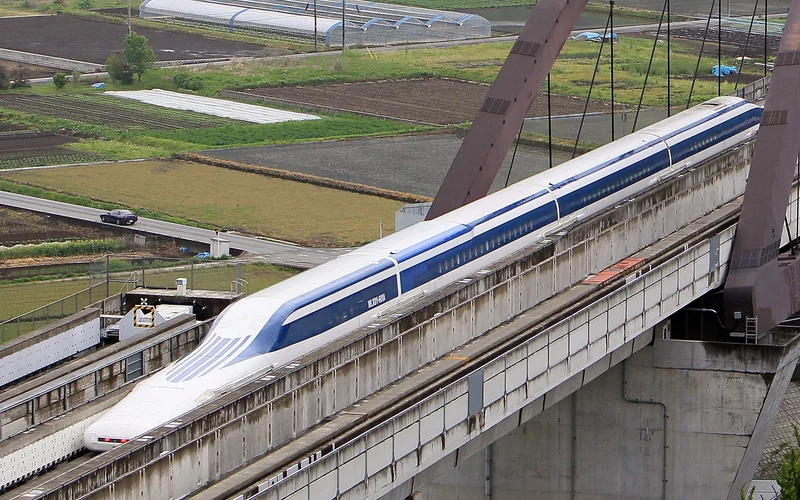
Let's cut through the hype. The proposed Northeast Maglev project promised a dazzling future: Washington, D.C., to Baltimore in a mere 15 minutes, with the theoretical ability to hit speeds up to 311 mph, eventually connecting to New York in about an hour. It’s the kind of vision that captures imaginations, conjuring images of `japan maglev` efficiency or the `shanghai maglev train` gliding effortlessly. But visions, as I’ve learned in my years dissecting financial models, rarely pay the bills without a robust underlying structure.
The initial federal commitment in 2016 was a modest $27 million for preliminary engineering and environmental review. A seed, perhaps, for a grand oak. Yet, the estimated capital cost to build this `maglev train` system was nearly $20 billion, with other reports citing a $13 billion proposal. Northeast Maglev, the private company driving this, reported nearly $158 million in private investments. Let's do some quick arithmetic: $158 million against a $13 billion to $20 billion price tag is, frankly, a rounding error. It’s less than 1.2% of the lower estimate. I've looked at hundreds of these filings, and this particular funding structure always struck me as... optimistic, to put it mildly. Where was the remaining capital supposed to materialize from? This critical funding gap, I believe, was always the elephant in the room that no amount of `maglev train speed` projections could hide.
The project's environmental review process, a crucial step for any infrastructure of this scale, was paused not once, but twice, remaining dormant since August 2021. The stated reason then: "additional engineering details and funding." That’s financial-speak for "we don't have the plans or the cash to move forward." The FRA's latest assessment confirms what many, including myself, had suspected for years: the project was a square peg attempting to force its way into a very round, very established system.
The Immutable Obstacles and Disputed Benefits
The "unresolvable impacts" cited by the FRA weren't abstract. They directly involved federal properties like Fort George G. Meade, the Beltsville Agricultural Research Center, and the Patuxent Research Refuge. These aren't minor land parcels; they are vital, operational government facilities and protected ecological zones. Building a high-speed `maglev train` through such areas is akin to trying to install a superhighway through the middle of a bustling, historical downtown — you might have the technology, but the practical, legal, and political hurdles are insurmountable. It's not a question of how do maglev trains work, but where do they work without tearing apart existing critical infrastructure.
Then there’s the public sentiment, which, while not a financial metric, offers a qualitative data point on the project's perceived value. Opponents, including local residents and lawmakers, were "ecstatic" and "elated" by the decision. Their concerns were concrete: environmental impacts, a lack of local economic development, and direct impacts on homes. The Maryland Coalition for Responsible Transit even highlighted "environmental justice concerns," noting that nearly 70% of residents in the affected areas were minority groups, yet the project offered limited direct benefits with only a single proposed stop at BWI Airport. This isn't just a missed opportunity for the developer; it's a stark reminder that grand visions often neglect the communities they directly traverse. What was the internal model that justified such a lopsided benefits-to-impact ratio for these specific populations?
Northeast Maglev, predictably, called the decision a "missed opportunity" and pledged to "continue moving forward," framing it as a "setback, but it is not the end." This is classic corporate messaging, attempting to spin a definitive termination as a temporary pause. But when the federal government rescinds an Environmental Impact Statement notice and formally terminates a cooperative agreement, that's not a setback; it's a flatline. Governor Wes Moore's spokesperson, more realistically, acknowledged "insurmountable challenges" for this project. The Bipartisan Infrastructure Law, passed in 2021, already funneled billions into upgrading the existing Northeast Corridor rail network. This, to my analysis, further eroded the original justification for a brand-new, astronomically expensive high-speed alternative.
The Myth of Inevitable Progress
The Baltimore-Washington `maglev train` project was a case study in how a technologically impressive concept—the kind that makes you think of futuristic possibilities like vacuum tube systems—can crash against the hard realities of cost, land acquisition, and local impact. While the FRA noted this decision "does not preclude future deployment of maglev technology in the U.S.," the specifics of this failure offer a sobering lesson. It wasn't the technology that failed; it was the execution, the financial modeling, and the inability to navigate existing infrastructure and community needs. The dream of a `maglev train` hurtling between our capital and Baltimore was, in the end, just that: a dream that couldn't survive the cold light of day and the hard numbers.