United Launch Alliance (ULA) is set to launch an Atlas V rocket tonight, carrying Viasat's ViaSat-3 F2 communications satellite. This launch is more than just another trip to geosynchronous orbit; it's a critical attempt to salvage Viasat's ambitious ViaSat-3 constellation plan after a major setback with its first satellite. The launch window opens at 10:24 p.m. EST, and the weather forecast looks promising (95% chance of favorable conditions).
The ViaSat-3 F2 satellite is designed to provide Ka-band network capabilities over the Americas, promising over 1 terabit per second (Tbps) of capacity. That's a substantial number—but let's put it in perspective. One terabit is 1000 gigabits. So, they are touting a HUGE amount of bandwidth. The problem? ViaSat-3 F1, launched in 2023, suffered an antenna issue that significantly reduced its capacity and delayed its entry into service. Details on the exact nature of the antenna failure remain scarce, but the impact is undeniable.
The Atlas V Gamble
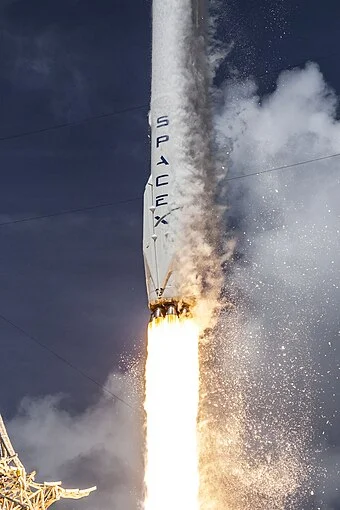
ULA's Atlas V, in its 551 configuration (five solid rocket boosters), is the chosen vehicle for this crucial mission. The rocket will deliver a hefty 2.7 million pounds of thrust at liftoff. That’s a lot of controlled explosion. The Atlas V has a solid track record, with this launch designated AV-100, the 105th Atlas V flight to date. That said, ULA only has 11 of these rockets remaining before it's officially retired. Why is this important? Because ULA has 6 Starliner missions and 5 Project Kuiper missions left to launch. If this launch is successful, ULA will have one less rocket to worry about.
The rocket's trajectory will head due east, and the satellite will be deployed approximately 3.5 hours after liftoff. Three separate firings of the RL10C-1-1 engine on the Centaur upper stage will be necessary to reach the correct orbit. The upper stage will then be placed in a "graveyard orbit," a common practice to avoid space junk accumulation. But all this is just the delivery mechanism. The real question is: can Viasat deliver on its promise of increased bandwidth this time?
Viasat's Chairman and CEO, Mark Dankberg, stated that ViaSat-3 F2's "dynamic beam forming capabilities will greatly benefit our customers by efficiently deploying bandwidth to the highest demand places." That sounds great in a press release, but what does it actually mean? Dynamic beam forming allows the satellite to focus its bandwidth where it's most needed, theoretically improving efficiency and performance. But the failure of ViaSat-3 F1 casts a long shadow.
From Promise to Peril: What Went Wrong?
The elephant in the room is the ViaSat-3 F1 antenna failure. While Viasat has been tight-lipped about the specifics, the reduced capacity and delayed service speak volumes. The success of ViaSat-3 F2 is now paramount. If this launch fails to deliver the promised terabit-per-second capacity, Viasat's reputation and future prospects will be severely jeopardized.
The satellite itself is built on Boeing’s 702MP+ platform, which uses electric propulsion and solar arrays from Spectrolab. Boeing is also supporting Viasat in launch operations and post-deployment checkouts. Michelle Parker, Vice President of Boeing Space Mission Systems, emphasized "reliability and timely delivery." But reliability is precisely what Viasat needs to demonstrate after the ViaSat-3 F1 debacle.
The launch is also part of a doubleheader evening, with SpaceX launching a batch of Starlink satellites earlier in the night. This highlights the increasing competition in the satellite broadband market. Viasat needs ViaSat-3 F2 to work, and work well, to stay competitive. It will be in service in early 2026, following months of on-orbit testing at its operating location of 79 degrees West longitude. Live updates ahead of record-tying SpaceX and ULA doubleheader rocket launch from Cape
I find the lack of detailed information about the ViaSat-3 F1 failure troubling. It’s a red flag when a company is less than transparent about a major technical issue. Are they hiding something, or is it simply a matter of protecting proprietary information? Either way, it doesn’t inspire confidence.
A Terabit-Sized Question Mark
Viasat's future hinges on this launch. The success of ViaSat-3 F2 is not just about adding capacity; it's about restoring credibility and proving that Viasat can deliver on its ambitious promises. If not, the company may find itself facing a very different competitive landscape.