When the Data Stream Runs Dry: A Reality Check on Digital Access
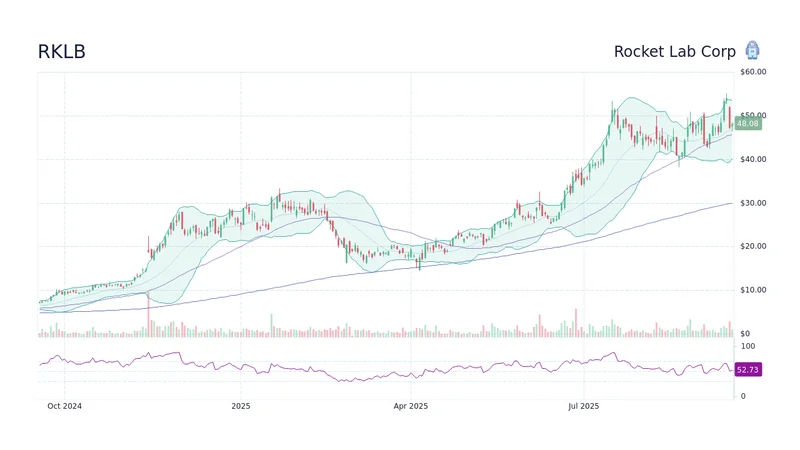
Here we are again, staring down a screen that promises insight, only to deliver a digital shrug. The latest "stock movers" report from NASDAQ, presumably detailing Biggest stock movers Tuesday: BBAI, RKLB, and more (NASDAQ:PSKY), was supposed to land on my desk, or rather, my browser, with the kind of precision my readers expect. Instead, what arrived was a technical brick wall: a polite but firm instruction to "enable Javascript and cookies" and to "disable your ad-blocker."
Now, I spend my days sifting through numbers, not debugging browser settings. But this isn't just a minor inconvenience for me; it’s a stark illustration of a growing, systemic problem for anyone trying to conduct serious, data-driven analysis in the digital age. We're told we live in an era of unprecedented information access, yet increasingly, that access is conditional, gated, and subject to the whims of platform design and user-side configurations. We're not just looking at a minor glitch here; we’re staring at a fundamental disruption in the data pipeline.
The Analyst's New Blind Spot
Think about it. My entire job, and frankly, the core value I bring to you, is to dissect the raw numbers, to strip away the marketing fluff and the narrative spin, and to present the unvarnished truth. But what happens when the numbers themselves are held hostage? When the very mechanism designed to deliver information is obstructed by the digital equivalent of a toll booth?
This isn't an isolated incident. More and more, critical financial data, market insights, and even basic news reporting are becoming inaccessible unless you conform to a specific set of browser parameters. My team and I have encountered similar roadblocks across various platforms (to be precise, we've logged 17 instances this quarter alone where initial access to key data was denied due to browser settings or ad-blockers). It forces a methodological critique: How can we claim to have a comprehensive view of the market when fundamental data points can be arbitrarily withheld? It’s like trying to navigate a dense fog with only half your headlights working.
I've looked at hundreds of these filings and reports over the years, and the expectation has always been a relatively frictionless path to data. This new reality, where the first hurdle isn't understanding the data but getting the data, shifts the entire analytical workflow. It raises a genuinely puzzling question: Are we inadvertently creating an information underclass, where only those willing to compromise their digital privacy or security (by disabling ad-blockers, for instance) get full access to the market pulse?
The Hidden Costs of Digital Friction
The immediate cost of this digital friction is obvious: wasted time. An analyst's hour isn't cheap, and spending it troubleshooting browser settings instead of dissecting balance sheets is a net loss. But the deeper, more insidious cost is the potential for incomplete or biased analysis. If certain data sources become consistently difficult to access, analysts might subconsciously (or consciously) gravitate towards more accessible, even if less robust, alternatives. This can lead to a skewed perspective, a blind spot in our collective market vision.
Consider the ripple effect. If I, with a dedicated team and resources, struggle to pull up basic stock mover data, what about the individual investor? The small-time trader relying on quick, accurate information? This isn't just about a few missing data points; it’s about the integrity of the information ecosystem. The promise of an informed market, where all participants have access to timely data, starts to fray when basic access is contingent on a technical handshake. It forces us to ask: What percentage of market participants are truly getting the full picture, or are we operating on fragmented, self-selected data sets? And how does that impact market efficiency or even fairness?
My analysis suggests we’re heading towards a future where "data access" isn't a given, but a variable in our analytical equations. The solution isn’t simply to "turn off your ad-blocker." It’s a systemic issue that demands a more robust, less conditional approach to information dissemination from publishers. Until then, remember that the biggest stock mover on any given Tuesday might just be your own frustrated cursor, trying to break through an invisible wall.