Tesla's Robot Dreams: A Trillion-Dollar Gamble or Just Hot Air?
Elon Musk's vision for Tesla extends far beyond electric vehicles. He's betting big on humanoid robots, specifically Optimus, envisioning a future where these bots are commonplace in homes and factories. This ambition is tied to his compensation package—he needs to deliver a million AI bots over the next decade to unlock the full value. But is this a sound investment, or a flight of fancy?
The Allure of Humanoid Robots: Potential vs. Reality
The potential market for humanoid robots is undeniably huge. Morgan Stanley estimates Apple alone could rake in $133 billion annually from robots by 2040 (assuming they enter the market, of course). The idea is appealing: robots that can interact with the physical world, performing tasks from factory work to household chores. Companies like Foxconn are already experimenting with them, and firms like 1X are developing robots like Neo, designed for domestic use. Neo, slated for a 2026 launch, can supposedly handle chores like emptying dishwashers and folding clothes—for a cool $20,000.
But here's the rub: that WSJ report mentioned that Neo is currently controlled by a person wearing a VR headset. That's not exactly the autonomous, AI-powered future Musk is selling. It's teleoperation, a far cry from true robotic intelligence. And this is the crux of the issue: the gap between the hype and the current reality.
Forrester analyst Brian Hopkins points to falling component costs, improved dexterity, and AI advancements as drivers for the feasibility of humanoid robots. He predicts significant disruption in physical-service industries by 2030. Musk himself believes the robot business could surpass Tesla's vehicle business, potentially becoming "the biggest product of all time." He also sees Optimus as a key player in advancing artificial general intelligence (AGI). Why human-shaped robots loom large in Musk's Tesla plans
The Optimus Question: Hype vs. Deliverables
Musk's bold claims need a reality check. While Boston Dynamics' Atlas wows with its acrobatic feats, that's largely for show, not practical application. Tesla's AI might be learning from the "outside world" (as Musk stated on X in 2022), but training AI for complex tasks in unstructured environments is a monumental challenge.
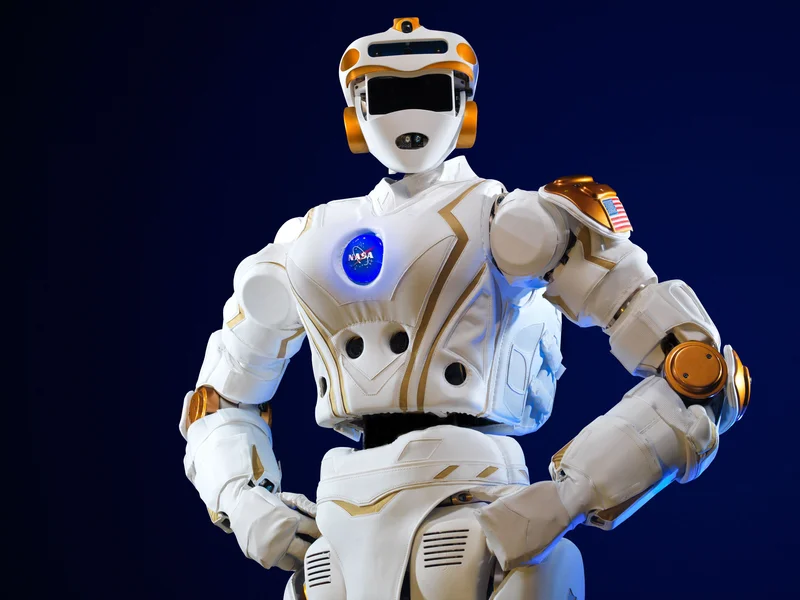
Consider the implications of deploying a million robots. What’s the projected cost per robot? What’s the energy consumption? What’s the environmental impact of manufacturing and maintaining that many complex machines? These are crucial questions that often get glossed over in the excitement. Details on Tesla's actual progress on Optimus’s AI capabilities remain scarce (beyond the occasional showroom appearance).
And this is the part that I find genuinely puzzling. Tesla is already struggling with scaling production of its existing products (the Cybertruck being a prime example). Adding a completely new product line—one that requires solving some of the hardest AI and robotics problems—seems like an enormous undertaking, even for a company with Tesla's resources. What's the opportunity cost here? Are they diverting resources from their core business?
The financial implications are staggering. Musk's pay package hinges on delivering these robots. But what if they fall short? What if the robots are too expensive, too unreliable, or simply not capable of performing the tasks needed? The risk is not just to Tesla's bottom line, but to investor confidence.
The Robot Revolution Delayed?
Musk's vision is compelling, but the path to realizing it is fraught with challenges. The technology is still in its early stages, the costs are high, and the practical applications are limited. While the potential market is vast, the actual demand for humanoid robots remains uncertain. The Morgan Stanley report estimates $133 billion for Apple by 2040, but that’s just one scenario. What if the market is only half that size? Or even smaller?
It's not about if humanoid robots will become a reality, but when and at what cost. The current hype seems premature. Tesla's bet on Optimus is a high-stakes gamble—one that could pay off handsomely or leave investors holding the bag.
Reality Check: Science Fiction or Silicon Valley Hype?
The promise of humanoid robots is enticing, but the data suggests that widespread adoption is still years away. Musk's ambitious timeline and lofty claims need to be viewed with skepticism. It's a moonshot, but one with a high probability of cratering.