Generated Title: America.Fun: Can Curation Save Meme Coins From Themselves?
America.Fun, the new Solana-based launchpad advised by World Liberty Financial’s Ogle, is pitching itself as the antidote to the meme coin free-for-all. The promise? A safer, more curated experience than the wild west of Pump.Fun. But can a little bit of adult supervision really tame the beast of decentralized finance? Let's crunch the numbers.
The Allure of the Walled Garden
Ogle, in an interview, frames America.Fun as a direct response to the scams and “catastrophic drops” plaguing permissionless meme coin platforms. The solution, according to him, is a “walled garden” approach – a curated frontend where offensive and scam tokens are kept out of sight, if not entirely off-chain. He even invokes the spirit of early AOL moderation.
The idea isn't without merit. Pump.Fun's open-door policy has undeniably led to a proliferation of spam and, frankly, some pretty distasteful tokens. America.Fun's launch fee (around $20 in AOL tokens) and restriction on duplicate tickers are designed to introduce friction and discourage bad actors. “When it costs a little, you think before you spam,” Ogle claims.
The question is, does this friction actually translate to a better experience for users and a more sustainable ecosystem for tokens? The data is, shall we say, incomplete.
Numbers Tell a Story (Sometimes)
The AOL token, America.Fun’s native token, launched in early September. As of November 2nd, it's trading at $0.0046, a 54% drop from its peak. Its market cap sits at $4.6 million, with a daily volume of $625,000. Now, Ogle points to 39,000 active users in the past 30 days and 222,000 page views (metrics he admits he probably won’t share again, presumably to keep competitors in the dark).
Here's where my analyst senses start tingling. Those user numbers, if accurate, are impressive for a relatively new platform. But they don't tell the whole story. A 54% price drop suggests that initial enthusiasm hasn't translated into sustained demand. It mirrors the wider post-October 10th crash, but it also hints at a potential problem: are users sticking around after the initial hype?
And this is the part of the report that I find genuinely puzzling. Ogle claims Singapore, China, and Ukraine are leading in traffic. This suggests an Asian focus, which isn't necessarily a bad thing, but it does raise questions about America.Fun's core market and its ability to compete with established players like Pump.Fun and LetsBonk.Fun, both of which have massive user bases.
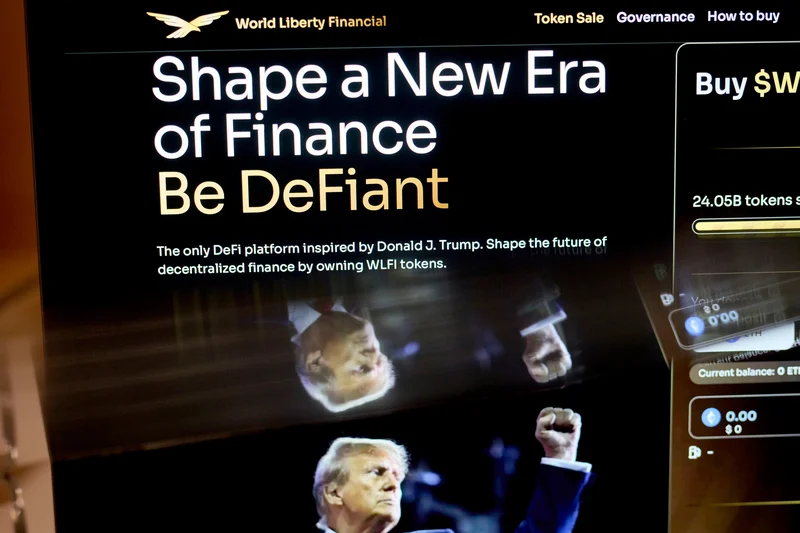
The decision to pair all new tokens against USD1 (World Liberty Financial’s stablecoin) instead of USDC could also limit accessibility. Ogle argues that DEX routers like Jupiter handle the conversion seamlessly, but it adds an extra step. Is that extra step worth it to support USD1 liquidity? The data on USD1 adoption would be crucial here, but it's conspicuously absent.
The Sustainability Question
America.Fun's curated approach is a bet that quality over quantity can win out in the meme coin space. But curation requires resources. Without clear revenue flows, audit transparency, or external verification of user data, it’s difficult to assess the platform’s long-term viability.
The platform does take a fee for each token launched. But is that sustainable? How many tokens need to launch per day/week/month to cover operating costs and maintain the "walled garden"? We don’t know.
And here’s my methodological critique. The data provided by Ogle is self-reported. While I don't doubt his sincerity, it's always best to have independent verification, especially when dealing with unaudited metrics. Without that, we're relying on faith, not facts. (And in the world of crypto, faith is a dangerous investment strategy.)
A Calculated Risk?
America.Fun is trying to thread a very fine needle. It wants to clean up the meme coin market without stifling its energy. It’s an ambitious goal, but the road to success is paved with unanswered questions and a distinct lack of verifiable data. Whether they can pull it off remains to be seen.